

Magnesium alloy 3D metal printing is a technical product recently consulted by many customers, and the market heat is relatively large. Today, I would like to share with you the characteristics of the product. Magnesium alloy is a lightweight and high-strength metal material with excellent mechanical properties and heat conduction properties. 3D printing technology is a manufacturing method that builds objects layer by layer, allowing materials to be accurately stacked together to form complex geometric shapes according to design requirements. In the 3D printing process of magnesium alloy metals, Selective Laser Melting (SLM) or Electron Beam Melting (EBM) are usually used. These techniques use laser or electron beams to melt metal powder layer by layer, solidifying it into the desired shape. The main benefits of magnesium alloy metal 3D printing include:
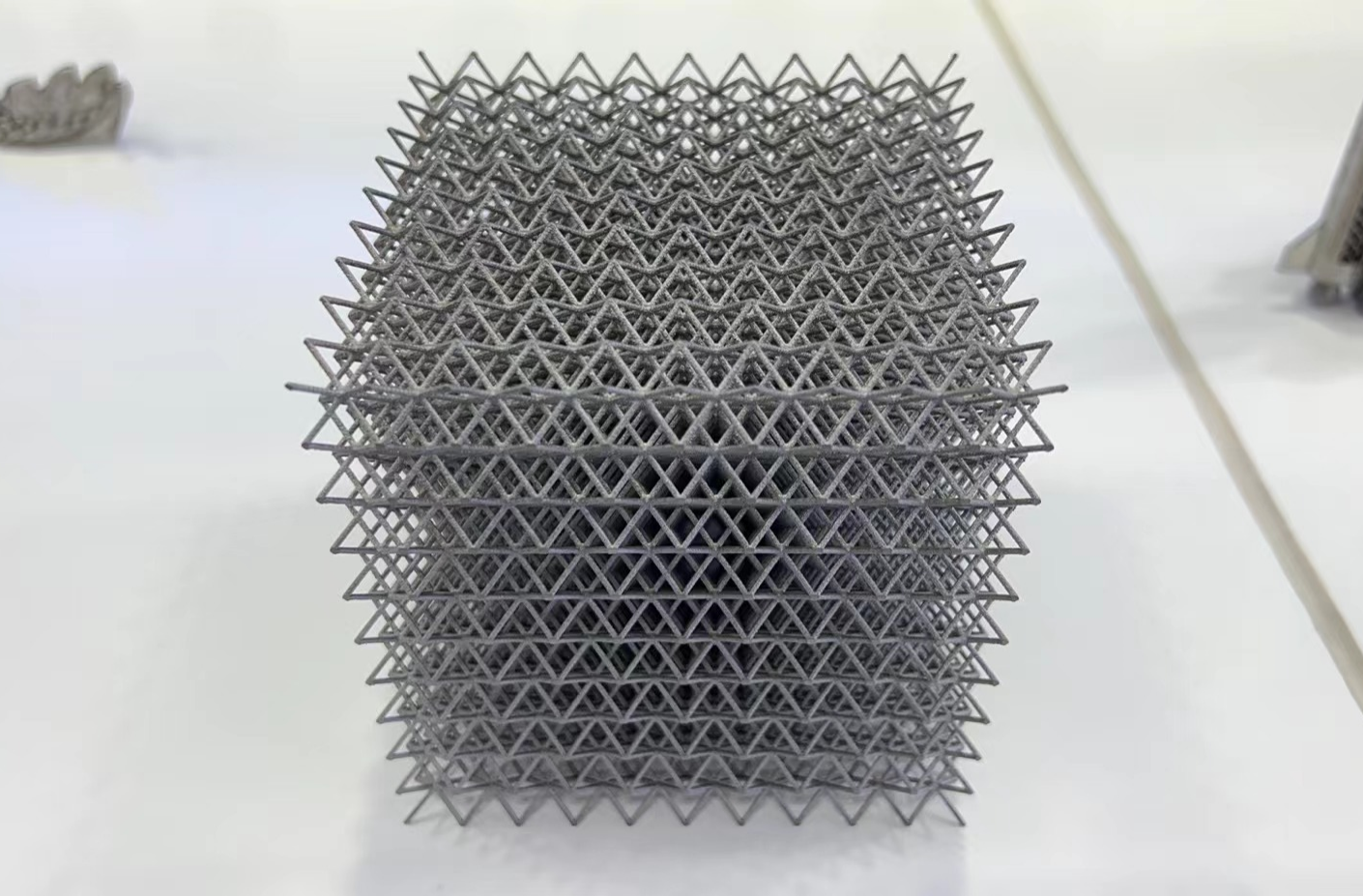
Lightweight design: Magnesium alloys have a low density, such as the commonly used AZ91D magnesium alloy density of only 1.8g/cm³, suitable for manufacturing parts that require weight limitations. Complex geometry: 3D printing technology can manufacture complex geometric shapes and internal structures, such as honeycomb structures, grid structures, etc., to provide better component performance and function. Rapid manufacturing: Compared with traditional processing methods, magnesium alloy metal 3D printing can save manufacturing time and cost, and reduce manual operation. Customized production: 3D printing technology allows customized production according to individual needs, providing tailor-made parts for specific applications. At present, magnesium alloy 3D metal printing is suitable for medical devices: magnesium alloy materials are increasingly important in the application of medical devices, such as implants, surgical tools and stents. It has good biocompatibility, can reduce the burden on the human body, and helps in bone repair. Aerospace industry: The lightweight and high-strength properties of magnesium alloy make it an ideal material for the aerospace sector. It can be used to manufacture aircraft structures, engine components, spacecraft components, etc., which can reduce the weight of the aircraft and improve fuel efficiency and performance. Electronic and communication equipment: The good heat conductivity of magnesium alloy materials makes it an ideal choice for strengthening the heat dissipation performance of electronic and communication equipment. It can be used to make radiators, computer cases, mobile phone cases and so on. Automobile industry: Magnesium alloy materials can be used in automobile manufacturing to manufacture engine parts, transmission systems, chassis and body structures. Its lightweight characteristics help reduce body weight, improve fuel economy and ride stability.
However, magnesium alloy metal 3D printing also has some challenges, such as high manufacturing costs, optimization of process parameters and control of material properties. Customers who have this demand can cooperate with us, as the industry's head company, solid technical end and strength, is a demonstration of our strength, with the continuous progress of materials science and 3D printing technology, magnesium alloy metal 3D printing is expected to be widely used in aerospace, automotive, medical equipment and other fields.
